Showing posts sorted by relevance for query social media. Sort by date Show all posts

Artificial Intelligence - Who Is Heather Knight?


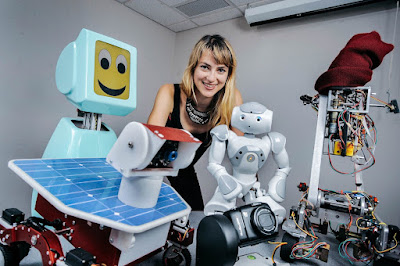
Heather Knight is a robotics and artificial intelligence specialist best recognized for her work in the entertainment industry.

Her Collaborative Humans and Robots: Interaction, Sociability, Machine Learning, and Art (CHARISMA) Research Lab at Oregon State University aims to apply performing arts techniques to robots.

Knight identifies herself as a social roboticist, a person who develops non-anthropomorphic—and sometimes nonverbal—machines that interact with people.

She makes robots that act in ways that are modeled after human interpersonal communication.

These behaviors include speaking styles, greeting movements, open attitudes, and a variety of other context indicators that assist humans in establishing rapport with robots in ordinary life.

Knight examines social and political policies relating to robotics in the CHARISMA Lab, where he works with social robots and so-called charismatic machines.

The Marilyn Monrobot interactive robot theatre company was founded by Knight.

The Robot Film Festival provides a venue for roboticists to demonstrate their latest inventions in a live setting, as well as films that are relevant to the evolving state of the art in robotics and robot-human interaction.

The Marilyn Monrobot firm arose from Knight's involvement with the Syyn Labs creative collective and her observations of Guy Hoffman, Director of the MIT Media Innovation Lab, on robots built for performance reasons.

Knight's production firm specializes on robot humor.

Knight claims that theatrical spaces are ideal for social robotics research because they not only encourage playfulness—requiring robot actors to express themselves and interact—but also include creative constraints that robots thrive in, such as a fixed stage, trial-and-error learning, and repeat performances (with manipu lated variations).

The usage of robots in entertainment situations, according to Knight, is beneficial since it increases human culture, imagination, and creativity.

At the TEDWomen conference in 2010, Knight debuted Data, a stand-up comedy robot.

Aldebaran Robotics created Data, an Nao robot (now SoftBank Group).

Data performs a comedy performance (with roughly 200 pre-programmed jokes) while gathering input from the audience and fine-tuning its act in real time.

The robot was created at Carnegie Mellon University by Scott Satkin and Varun Ramakrisha.

Knight is presently collaborating with Ginger the Robot on a comedic project.

The development of algorithms for artificial social intelligence is also fueled by robot entertainment.

In other words, art is utilized to motivate the development of new technologies.

To evaluate audience responses and understand the noises made by audiences, Data and Ginger use a microphone and a machine learning system (laughter, chatter, clap ping, etc.).

After each joke, the audience is given green and red cards to hold up.

Green cards indicate to the robots that the audience enjoys the joke.

Red cards are given out when jokes fall flat.

Knight has discovered that excellent robot humor doesn't have to disguise the fact that it's about a robot.

Rather, Data makes people laugh by drawing attention to its machine-specific issues and making self-deprecating remarks about its limits.

In order to create expressive, captivating robots, Knight has found improvisational acting and dancing skills to be quite useful.

In the process, she has changed the original Robotic Paradigm's technique of Sense-Plan-Act, preferring Sensing-Character-Enactment, which is more similar to the procedure utilized in theatrical performance in practice.

Knight is presently experimenting with ChairBots, which are hybrid robots made by gluing IKEA wooden chairs to Neato Botvacs (a brand of intelligent robotic vacuum cleaner).

The ChairBots are being tested in public places to see how a basic robot might persuade people to get out of the way using just rudimentary gestures as a mode of communication.

They've also been used to persuade prospective café customers to come in, locate a seat, and settle down.

Knight collaborated on the synthetic organic robot art piece Public Anemone for the SIGGRAPH computer graphics conference while pursuing degrees at the MIT Media Lab with Personal Robots group head Professor Cynthia Breazeal.

The installation consisted of a fiberglass cave filled with glowing creatures that moved and responded to music and people.

The cave's centerpiece robot, also known as "Public Anemone," swayed and interacted with visitors, bathed in a waterfall, watered a plant, and interacted with other cave attractions.

Knight collaborated with animatronics designer Dan Stiehl to create capacitive sensor-equipped artificial tube worms.

The tubeworm's fiberoptic tentacles drew into their tubes and changed color when a human observer reached into the cave, as though prompted by protective impulses.

The team behind Public Anemone defined the initiative as "a step toward fully embodied robot theatrical performance" and "an example of intelligent staging." Knight also helped with the mechanical design of the Smithsonian/Cooper-Hewitt Design Museum's "Cyberflora" kinetic robot flower garden display in 2003.

Her master's thesis at MIT focused on the Sensate Bear, a huggable robot teddy bear with full-body capacitive touch sensors that she used to investigate real-time algorithms incorporating social touch and nonverbal communication.

In 2016, Knight received her PhD from Carnegie Mellon University.

Her dissertation focused on expressive motion in robots with a reduced degree of freedom.

Humans do not require robots to closely resemble humans in appearance or behavior to be treated as close associates, according to Knight's research.

Humans, on the other hand, are quick to anthropomorphize robots and offer them autonomy.

Indeed, she claims, when robots become more human-like in appearance, people may feel uneasy or anticipate a far higher level of humanlike conduct.

Professor Matt Mason of the School of Computer Science and Robotics Institute advised Knight.

She was formerly a robotic artist in residence at Alphabet's X, Google's parent company's research lab.

Knight has previously worked with Aldebaran Robotics and NASA's Jet Propulsion Laboratory as a research scientist and engineer.

While working as an engineer at Aldebaran Robotics, Knight created the touch sensing panel for the Nao autonomous family companion robot, as well as the infrared detection and emission capabilities in its eyes.

Syyn Labs won a UK Music Video Award for her work on the opening two minutes of the OK Go video "This Too Shall Pass," which contains a Rube Goldberg machine.

She is now assisting Clearpath Robotics in making its self-driving, mobile-transport robots more socially conscious. 


Jai Krishna Ponnappan


You may also want to read more about Artificial Intelligence here.


See also: 


RoboThespian; Turkle, Sherry.


Further Reading:


Biever, Celeste. 2010. “Wherefore Art Thou, Robot?” New Scientist 208, no. 2792: 50–52.

Breazeal, Cynthia, Andrew Brooks, Jesse Gray, Matt Hancher, Cory Kidd, John McBean, Dan Stiehl, and Joshua Strickon. 2003. “Interactive Robot Theatre.” Communications of the ACM 46, no. 7: 76–84.

Knight, Heather. 2013. “Social Robots: Our Charismatic Friends in an Automated Future.” Wired UK, April 2, 2013. https://www.wired.co.uk/article/the-inventor.

Knight, Heather. 2014. How Humans Respond to Robots: Building Public Policy through Good Design. Washington, DC: Brookings Institute, Center for Technology Innovation.


Artificial Intelligence - Climate Change Crisis And AI.


Artificial intelligence has a double-edged sword when it comes to climate change and the environment.


Artificial intelligence is being used by scientists to detect, adapt, and react to ecological concerns.

Civilization is becoming exposed to new environmental hazards and vulnerabilities as a result of the same technologies.

Much has been written on the importance of information technology in green economy solutions.

Data from natural and urban ecosystems is collected and analyzed using intelligent sensing systems and environmental information systems.

Machine learning is being applied in the development of sustainable infrastructure, citizen detection of environmental perturbations and deterioration, contamination detection and remediation, and the redefining of consumption habits and resource recycling.


Planet hacking is a term used to describe such operations.


Precision farming is one example of planet hacking.

Artificial intelligence is used in precision farming to diagnose plant illnesses and pests, as well as detect soil nutrition issues.

Agricultural yields are increased while water, fertilizer, and chemical pesticides are used more efficiently thanks to sensor technology directed by AI.

Controlled farming approaches offer more environmentally friendly land management and (perhaps) biodiversity conservation.

Another example is IBM Research's collaboration with the Chinese government to minimize pollution in the nation via the Green Horizons program.

Green Horizons is a ten-year effort that began in July 2014 with the goal of improving air quality, promoting renewable energy integration, and promoting industrial energy efficiency.

To provide air quality reports and track pollution back to its source, IBM is using cognitive computing, decision support technologies, and sophisticated sensors.

Green Horizons has grown to include global initiatives such as collaborations with Delhi, India, to link traffic congestion patterns with air pollution; Johannesburg, South Africa, to fulfill air quality objectives; and British wind farms, to estimate turbine performance and electricity output.

According to the National Renewable Energy Laboratory at the University of Maryland, AI-enabled automobiles and trucks are predicted to save a significant amount of gasoline, maybe in the region of 15% less use.


Smart cars eliminate inefficient combustion caused by stop-and-go and speed-up and slow-down driving behavior, resulting in increased fuel efficiency (Brown et al.2014).


Intelligent driver input is merely the first step toward a more environmentally friendly automobile.

According to the Society of Automotive Engineers and the National Renewable Energy Laboratory, linked automobiles equipped with vehicle-to-vehicle (V2V) and vehicle-to-infrastructure (V2I) communication might save up to 30% on gasoline (Gonder et al.

2012).

Smart trucks and robotic taxis will be grouped together to conserve fuel and minimize carbon emissions.

Environmental robots (ecobots) are projected to make significant advancements in risk monitoring, management, and mitigation.

At nuclear power plants, service robots are in use.

Two iRobot PackBots were sent to Japan's Fukushima nuclear power plant to measure radioactivity.

Treebot is a dexterous tree-climbing robot that is meant to monitor arboreal environments that are too difficult for people to access.

The Guardian, a robot created by the same person who invented the Roomba, is being developed to hunt down and remove invasive lionfish that endanger coral reefs.

A similar service is being provided by the COTSbot, which employs visual recognition technology to wipe away crown-of-thorn starfish.

Artificial intelligence is assisting in the discovery of a wide range of human civilization's effects on the natural environment.

Cornell University's highly multidisciplinary Institute for Computer Sustainability brings together professional scientists and citizens to apply new computing techniques to large-scale environmental, social, and economic issues.

Birders are partnering with the Cornell Lab of Ornithology to submit millions of observations of bird species throughout North America, to provide just one example.

An app named eBird is used to record the observations.

To monitor migratory patterns and anticipate bird population levels across time and space, computational sustainability approaches are applied.

Wildbook, iNaturalist, Cicada Hunt, and iBats are some of the other crowdsourced nature observation apps.

Several applications are linked to open-access databases and big data initiatives, such as the Global Biodiversity Information Facility, which will include 1.4 billion searchable entries by 2020.


By modeling future climate change, artificial intelligence is also being utilized to assist human populations understand and begin dealing with environmental issues.

A multidisciplinary team from the Montreal Institute for Learning Algorithms, Microsoft Research, and ConscientAI Labs is using street view imagery of extreme weather events and generative adversarial networks—in which two neural networks are pitted against one another—to create realistic images depicting the effects of bushfires and sea level rise on actual neighborhoods.

Human behavior and lifestyle changes may be influenced by emotional reactions to photos.

Virtual reality simulations of contaminated ocean ecosystems are being developed by Stanford's Virtual Human Interaction Lab in order to increase human empathy and modify behavior in coastal communities.


Information technology and artificial intelligence, on the other hand, play a role in the climate catastrophe.


The pollution created by the production of electronic equipment and software is one of the most pressing concerns.

These are often seen as clean industries, however they often use harsh chemicals and hazardous materials.

With twenty-three active Superfund sites, California's Silicon Valley is one of the most contaminated areas in the country.

Many of these hazardous waste dumps were developed by computer component makers.

Trichloroethylene, a solvent used in semiconductor cleaning, is one of the most common soil pollutants.

Information technology uses a lot of energy and contributes a lot of greenhouse gas emissions.

Solar-powered data centers and battery storage are increasingly being used to power cloud computing data centers.


In recent years, a number of cloud computing facilities have been developed around the Arctic Circle to take use of the inherent cooling capabilities of the cold air and ocean.


The so-called Node Pole, situated in Sweden's northernmost county, is a favored location for such building.

In 2020, a data center project in Reykjavik, Iceland, will run entirely on renewable geo thermal and hydroelectric energy.

Recycling is also a huge concern, since life cycle engineering is just now starting to address the challenges of producing environmentally friendly computers.

Toxic electronic trash is difficult to dispose of in the United States, thus a considerable portion of all e-waste is sent to Asia and Africa.

Every year, some 50 million tons of e-waste are produced throughout the globe (United Nations 2019).

Jack Ma of the international e-commerce company Alibaba claimed at the World Economic Forum annual gathering in Davos, Switzerland, that artificial intelligence and big data were making the world unstable and endangering human life.

Artificial intelligence research's carbon impact is just now being quantified with any accuracy.

While Microsoft and Pricewaterhouse Coopers reported that artificial intelligence could reduce carbon dioxide emissions by 2.4 gigatonnes by 2030 (the combined emissions of Japan, Canada, and Australia), researchers at the University of Massachusetts, Amherst discovered that training a model for natural language processing can emit the equivalent of 626,000 pounds of greenhouse gases.

This is over five times the carbon emissions produced by a typical automobile throughout the course of its lifespan, including original production.

Artificial intelligence has a massive influence on energy usage and carbon emissions right now, especially when models are tweaked via a technique called neural architecture search (Strubell et al. 2019).

It's unclear if next-generation technologies like quantum artificial intelligence, chipset designs, and unique machine intelligence processors (such as neuromorphic circuits) would lessen AI's environmental effect.


Artificial intelligence is also being utilized to extract additional oil and gas from beneath, but more effectively.


Oilfield services are becoming more automated, and businesses like Google and Microsoft are opening offices and divisions to cater to them.

Since the 1990s, Total S.A., a French multinational oil firm, has used artificial intelligence to enhance production and understand subsurface data.

Total partnered up with Google Cloud Advanced Solutions Lab professionals in 2018 to use modern machine learning techniques to technical data analysis difficulties in the exploration and production of fossil fuels.

Every geoscience engineer at the oil company will have access to an AI intelligent assistant, according to Google.

With artificial intelligence, Google is also assisting Anadarko Petroleum (bought by Occidental Petroleum in 2019) in analyzing seismic data to discover oil deposits, enhance production, and improve efficiency.


Working in the emerging subject of evolutionary robotics, computer scientists Joel Lehman and Risto Miikkulainen claim that in the case of a future extinction catastrophe, superintelligent robots and artificial life may swiftly breed and push out humans.


In other words, robots may enter the continuing war between plants and animals.

To investigate evolvability in artificial and biological populations, Lehman and Miikkulainen created computer models to replicate extinction events.

The study is mostly theoretical, but it may assist engineers comprehend how extinction events could impact their work; how the rules of variation apply to evolutionary algorithms, artificial neural networks, and virtual organisms; and how coevolution and evolvability function in ecosystems.

As a result of such conjecture, Emerj Artificial Intelligence Research's Daniel Faggella notably questioned if the "environment matter[s] after the Singularity" (Faggella 2019).

Ian McDonald's River of Gods (2004) is a notable science fiction novel about climate change and artificial intelligence.

The book's events take place in 2047 in the Indian subcontinent.

A.I.Artificial Intelligence (2001) by Steven Spielberg is set in a twenty-second-century planet plagued by global warming and rising sea levels.

Humanoid robots are seen as important to the economy since they do not deplete limited resources.

Transcendence, a 2014 science fiction film starring Johnny Depp as an artificial intelligence researcher, portrays the cataclysmic danger of sentient computers as well as its unclear environmental effects.


~ Jai Krishna Ponnappan

You may also want to read more about Artificial Intelligence here.


See also: 


Chatbots and Loebner Prize; Gender and AI; Mobile Recommendation Assistants; Natural Language Processing and Speech Understanding.


Further Reading


Bort, Julie. 2017. “The 43 Most Powerful Female Engineers of 2017.” Business Insider. https://www.businessinsider.com/most-powerful-female-engineers-of-2017-2017-2.

Chan, Sharon Pian. 2011. “Tech-Savvy Dreamer Runs Microsoft’s Social-Media Lab.” Seattle Times. https://www.seattletimes.com/business/tech-savvy-dreamer-runs-microsofts-social-media-lab.

Cheng, Lili. 2018. “Why You Shouldn’t Be Afraid of Artificial Intelligence.” Time. http://time.com/5087385/why-you-shouldnt-be-afraid-of-artificial-intelligence.

Cheng, Lili, Shelly Farnham, and Linda Stone. 2002. “Lessons Learned: Building and Deploying Shared Virtual Environments.” In The Social Life of Avatars: Com￾puter Supported Cooperative Work, edited by Ralph Schroeder, 90–111. London: Springer.

Davis, Jeffrey. 2018. “In Chatbots She Trusts: An Interview with Microsoft AI Leader Lili Cheng.” Workflow. https://workflow.servicenow.com/customer-experience/lili-chang-ai-chatbot-interview.


Artificial Intelligence - What Is Automatic Film Editing?


Automatic film editing is a method of assembling full motion movies in which an algorithm, taught to obey fundamental cinematography standards, cuts and sequences footage.

Automated editing is part of a larger endeavor, known as intelligent cinematography, to include artificial intelligence into filmmaking.

Alfred Hitchcock, the legendary director, predicted that an IBM computer will one day be capable of converting a written script into a polished picture in the mid-1960s.

Many of the concepts of modern filmmaking were created by Alfred Hitchcock.

His argument that, if feasible, the size of a person or item in frame should be proportionate to their importance in the plot at that precise moment in time is one well-known rule of thumb.

"Exit left, enter right," which helps the audience follow lateral motions of actors on the screen, and the 180 and 30-degree principles for preserving spatial connections between subjects and the camera, are two more film editing precepts that arose through extensive experience by filmmakers.

Over time, these principles evolved into heuristics that regulate shot selection, editing, and rhythm and tempo.

Joseph Mascelli's Five C's of Cinematography (1965), for example, has become a large knowledge base for making judgments regarding camera angles, continuity, editing, closeups, and composition.

These human-curated guidelines and human-annotated movie stock material and snippets gave birth to the first artificial intelligence film editing systems.

IDIC, created by Warren Sack and Marc Davis at the MIT Media Lab in the early 1990s, is an example of a system from that era.

IDIC is based on Herbert Simon, J. C. Shaw, and Allen Newell's General Issue Solver, an early artificial intelligence software that was supposed to answer any general problem using the same fundamental method.

IDIC was used to create fictitious Star Trek television trailers based on a human-specified narrative plan focusing on a certain plot element.

Several film editing systems depend on idioms, or standard techniques for editing and framing recorded action in certain contexts.

The idioms themselves will differ depending on the film's style, the setting, and the action to be shown.

In this manner, experienced editors' expertise may be accessed using case-based reasoning, with prior editing recipes being used to tackle comparable present and future challenges.

Editing for combat sequences, like regular character talks, follows standard idiomatic route methods.

This is the method used by Li-wei He, Michael F. Cohen, and David H. Salesin in their Virtual Cinema tographer, which uses expert idiom knowledge in the editing of fully computer-generated video for interactive virtual environments.

He's group created the Declarative Camera Control Language (DCCL), which formalizes the control of camera locations in the editing of CGI animated films to match cinematographic traditions.

Researchers have lately begun experimenting with deep learning algorithms and training data extracted from existing collections of well-known films with good cinematographic quality to develop recommended best cuts of new films.

Many of the latest apps may be used with mobile, drone, or portable devices.

Short and interesting films constructed from pictures taken by amateurs with smartphones are projected to become a preferred medium of interaction over future social media due to easy automated video editing.

Photography is presently filling that need.

In machinima films generated with 3D virtual game engines and virtual actors, automatic film editing is also used as an editing technique.


~ Jai Krishna Ponnappan

You may also want to read more about Artificial Intelligence here.


See also: 

Workplace Automation.


Further Reading

Galvane, Quentin, RĂ©mi Ronfard, and Marc Christie. 2015. “Comparing Film-Editing.” In Eurographics Workshop on Intelligent Cinematography and Editing, edited by William H. Bares, Marc Christie, and RĂ©mi Ronfard, 5–12. Aire-la-Ville, Switzerland: Eurographics Association.

He, Li-wei, Michael F. Cohen, and David H. Salesin. 1996. “The Virtual Cinematographer: A Paradigm for Automatic Real-Time Camera Control and Directing.” In 

Proceedings of SIGGRAPH ’96, 217–24. New York: Association for Computing Machinery.

Ronfard, RĂ©mi. 2012. “A Review of Film Editing Techniques for Digital Games.” In Workshop on Intelligent Cinematography and Editing. https://hal.inria.fr/hal-00694444/.

Artificial Intelligence - Who Is Sherry Turkle?


Sherry Turkle(1948–) has a background in sociology and psychology, and her work focuses on the human-technology interaction.

While her study in the 1980s focused on how technology affects people's thinking, her work in the 2000s has become more critical of how technology is utilized at the expense of building and maintaining meaningful interpersonal connections.


She has employed artificial intelligence in products like children's toys and pets for the elderly to highlight what people lose out on when interacting with such things.


Turkle has been at the vanguard of AI breakthroughs as a professor at the Massachusetts Institute of Technology (MIT) and the creator of the MIT Initiative on Technology and the Self.

She highlights a conceptual change in the understanding of AI that occurs between the 1960s and 1980s in Life on the Screen: Identity inthe Age of the Internet (1995), substantially changing the way humans connect to and interact with AI.


She claims that early AI paradigms depended on extensive preprogramming and employed a rule-based concept of intelligence.


However, this viewpoint has given place to one that considers intelligence to be emergent.

This emergent paradigm, which became the recognized mainstream view by 1990, claims that AI arises from a much simpler set of learning algorithms.

The emergent method, according to Turkle, aims to emulate the way the human brain functions, assisting in the breaking down of barriers between computers and nature, and more generally between the natural and the artificial.

In summary, an emergent approach to AI allows people to connect to the technology more easily, even thinking of AI-based programs and gadgets as children.


Not just for the area of AI, but also for Turkle's study and writing on the subject, the rising acceptance of the emerging paradigm of AI and the enhanced relatability it heralds represents a significant turning point.


Turkle started to employ ethnographic research techniques to study the relationship between humans and their gadgets in two edited collections, Evocative Objects: Things We Think With (2007) and The Inner History of Devices (2008).


She emphasized in her book The Inner History of Devices that her intimate ethnography, or the ability to "listen with a third ear," is required to go past the advertising-based clichés that are often employed when addressing technology.


This method comprises setting up time for silent meditation so that participants may think thoroughly about their interactions with their equipment.


Turkle used similar intimate ethnographic approaches in her second major book, Alone Together

Why We Expect More from Technology and Less from Each Other (2011), to argue that the increasing connection between people and the technology they use is harmful.

These issues are connected to the increased usage of social media as a form of communication, as well as the continuous degree of familiarity and relatability with technology gadgets, which stems from the emerging AI paradigm that has become practically omnipresent.

She traced the origins of the dilemma back to early pioneers in the field of cybernetics, citing, for example, Norbert Weiner's speculations on the idea of transmitting a human person across a telegraph line in his book God & Golem, Inc.(1964).

Because it reduces both people and technology to information, this approach to cybernetic thinking blurs the barriers between them.


In terms of AI, this implies that it doesn't matter whether the machines with which we interact are really intelligent.


Turkle claims that by engaging with and caring for these technologies, we may deceive ourselves into feeling we are in a relationship, causing us to treat them as if they were sentient.

In a 2006 presentation titled "Artificial Intelligence at 50: From Building Intelligence to Nurturing Sociabilities" at the Dartmouth Artificial Intelligence Conference, she recognized this trend.

She identified the 1997 Tamagotchi, 1998 Furby, and 2000 MyReal Baby as early versions of what she refers to as relational artifacts, which are more broadly referred to as social machines in the literature.

The main difference between these devices and previous children's toys is that these devices come pre-animated and ready for a relationship, whereas previous children's toys required children to project a relationship onto them.

Turkle argues that this change is about our human weaknesses as much as it is about computer capabilities.

In other words, just caring for an item increases the likelihood of not only seeing it as intelligent but also feeling a connection to it.

This sense of connection is more relevant to the typical person engaging with these technologies than abstract philosophic considerations concerning the nature of their intelligence.


Turkle delves more into the ramifications of people engaging with AI-based technologies in both Alone Together and Reclaiming Conversation: The Power of Talk in a Digital Age (2015).


She provides the example of Adam in Alone Together, who appreciates the appreciation of the AI bots he controls over in the game Civilization.

Adam appreciates the fact that he is able to create something fresh when playing.

Turkle, on the other hand, is skeptical of this interaction, stating that Adam's playing isn't actual creation, but rather the sensation of creation, and that it's problematic since it lacks meaningful pressure or danger.

In Reclaiming Conversation, she expands on this point, suggesting that social partners simply provide a perception of camaraderie.

This is important because of the value of human connection and what may be lost in relationships that simply provide a sensation or perception of friendship rather than true friendship.

Turkle believes that this transition is critical.


She claims that although connections with AI-enabledtechnologies may have certain advantages, they pale in contrast to what is missing: 

  • the complete complexity and inherent contradictions that define what it is to be human.


A person's connection with an AI-enabled technology is not as intricate as one's interaction with other individuals.


Turkle claims that as individuals have become more used to and dependent on technology gadgets, the definition of friendship has evolved.


  • People's expectations for companionship have been simplified as a result of this transformation, and the advantages that one wants to obtain from partnerships have been reduced.
  • People now tend to associate friendship only with the concept of interaction, ignoring the more nuanced sentiments and arguments that are typical in partnerships.
  • By engaging with gadgets, one may form a relationship with them.
  • Conversations between humans have become merely transactional as human communication has shifted away from face-to-face conversation and toward interaction mediated by devices. 

In other words, the most that can be anticipated is engagement.


Turkle, who has a background in psychoanalysis, claims that this kind of transactional communication allows users to spend less time learning to view the world through the eyes of another person, which is a crucial ability for empathy.


Turkle argues we are in a robotic period in which people yearn for, and in some circumstances prefer, AI-based robotic companionship over that of other humans, drawing together these numerous streams of argument.

For example, some people enjoy conversing with their iPhone's Siri virtual assistant because they aren't afraid of being judged by it, as evidenced by a series of Siri commercials featuring celebrities talking to their phones.

Turkle has a problem with this because these devices can only respond as if they understand what is being said.


AI-based gadgets, on the other hand, are confined to comprehending the literal meanings of data stored on the device.

They can decipher the contents of phone calendars and emails, but they have no idea what any of this data means to the user.

There is no discernible difference between a calendar appointment for car maintenance and one for chemotherapy for an AI-based device.

A person may lose sight of what it is to have an authentic dialogue with another human when entangled in a variety of these robotic connections with a growing number of technologies.


While Reclaiming Communication documents deteriorating conversation skills and decreasing empathy, it ultimately ends on a positive note.

Because people are becoming increasingly dissatisfied with their relationships, there may be a chance for face-to-face human communication to reclaim its vital role.


Turkle's ideas focus on reducing the amount of time people spend on their phones, but AI's involvement in this interaction is equally critical.


  • Users must accept that their virtual assistant connections will never be able to replace face-to-face interactions.
  • This will necessitate being more deliberate in how one uses devices, prioritizing in-person interactions over the faster and easier interactions provided by AI-enabled devices.


~ Jai Krishna Ponnappan

Find Jai on Twitter | LinkedIn | Instagram


You may also want to read more about Artificial Intelligence here.


See also: 

Blade Runner; Chatbots and Loebner Prize; ELIZA; General and Narrow AI; Moral Turing Test; PARRY; Turing, Alan; 2001: A Space Odyssey.


References And Further Reading

  • Haugeland, John. 1997. “What Is Mind Design?” Mind Design II: Philosophy, Psychology, Artificial Intelligence, edited by John Haugeland, 1–28. Cambridge, MA: MIT Press.
  • Searle, John R. 1997. “Minds, Brains, and Programs.” Mind Design II: Philosophy, Psychology, Artificial Intelligence, edited by John Haugeland, 183–204. Cambridge, MA: MIT Press.
  • Turing, A. M. 1997. “Computing Machinery and Intelligence.” Mind Design II: Philosophy, Psychology, Artificial Intelligence, edited by John Haugeland, 29–56. Cambridge, MA: MIT Press.


Quantum Revolution 2.0 - Our First Civic Duty Is to Educate Ourselves.


One thing is certain: future quantum technologies will profoundly alter the planet. 


As a result, our current choices have a lot of clout. 

The scientific underpinnings for current car, rail, and air traffic, as well as modern communication and data processing, were established in the eighteenth and nineteenth centuries, and the foundations for the wonder technologies of the twenty-first century are being created now. 


There is just a short window of opportunity before technology and social norms become so entrenched that we won't be able to reverse them. 


This is why an active, wide-ranging social, and, of course, democratic debate is so critical. 

The ethical assessment and political molding of future technologies must go beyond individual, corporate, or governmental economic or military objectives. 

This will require a democratic commitment from everyone of us, including the responsibility to educate ourselves and share ideas. 

It should also be a requirement of ours that the media offer thorough coverage of scientific advances and advancements. 


When journalists and others who shape public opinion report on global events and significant social changes, there is much too little mention of physics, chemistry, or biology. 


In addition to ethical integrity, we must expect intellectual honesty from politicians and other social and economic decision-makers. 

This implies that intentional lies, as well as information distortion and filtering for the aim of imposing certain objectives, must be constantly combated. 

It is intolerable that false news can wield such devastating propagandistic influence these days, and that a worrying proportion of politicians, for example, continue to genuinely question climate change and Darwin's theory of evolution. 

The commandment of intellectual honesty, however, also applies to those who receive knowledge. 

We must learn to think things through before jumping to conclusions, to examine our own biases, and to participate in complicated interrelationships without oversimplifying everything. 


Last but not least, we must accept uncomfortable facts. 


Every citizen's role in influencing our technological future is to aim for a wide, reasonable, information- and fact-based debate. 

It will be beneficial to keep a careful eye on the progress of quantum physics research. 

The unique characteristics of the quantum universe are becoming an essential part of our daily lives, and we are seeing a watershed point in human history. 

Those who do not pay attention risk losing out and discovering what has occurred after it is too late. 


Our current knowledge of entanglement offers us a peek of what may be possible in the not-too-distant future of technology. However, the future has already started. 


~ Jai Krishna Ponnappan


You may also want to read more about Quantum Computing here.


Artificial Intelligence - Emotion Recognition And Emotional Intelligence.


A group of academics released a meta-analysis of studies in 2019 indicating that a person's mood may be determined from their facial movements. 

They came to the conclusion that there is no evidence that emotional state can be predicted from expression, regardless of whether the assessment is made by a person or by technology. 


The coauthors noted, "[Facial expressions] in issue are not 'fingerprints' or diagnostic displays that dependably and explicitly convey distinct emotional states independent of context, person, or culture."


  "It's impossible to deduce pleasure from a grin, anger from a scowl, or grief from a frown with certainty." 

This statement may be disputed by Alan Cowen. He's the creator of Hume AI, a new research lab and "empathetic AI" firm coming from stealth today. He's an ex-Google scientist. 


Hume claims to have created datasets and models that "react beneficially to [human] emotion signals," allowing clients ranging from huge tech firms to startups to recognize emotions based on a person's visual, vocal, and spoken expressions. 

"When I first entered the area of emotion science, the majority of researchers were focusing on a small number of posed emotional expressions in the lab. 

Cowen told, "I wanted to apply data science to study how individuals genuinely express emotion out in the world, spanning ethnicities and cultures." 

"I uncovered a new universe of nuanced and complicated emotional behaviors that no one had ever recorded before using new computational approaches, and I was quickly publishing in the top journals." That's when businesses started contacting me." 

Hume, which has 10 workers and just secured $5 million in investment, claims to train its emotion-recognizing algorithms using "huge, experimentally-controlled, culturally varied" datasets from individuals throughout North America, Africa, Asia, and South America. 

Regardless of the data's representativeness, some experts doubt the premise that emotion-detecting algorithms have a scientific base. 


"The kindest view I have is that there are some really well-intentioned folks who are naive enough that... the issue they're attempting to cure is caused by technology," 

~ Os Keyes, an AI ethics scientist at the University of Washington. 


"Their first offering raises severe ethical concerns... It's evident that they aren't addressing the topic as a problem to be addressed, interacting deeply with it, and contemplating the potential that they aren't the first to conceive of it." 

HireVue, Entropik Technology, Emteq, Neurodata Labs, Neilson-owned Innerscope, Realeyes, and Eyeris are among the businesses in the developing "emotional AI" sector. 

Entropik says that their technology can interpret emotions "through facial expressions, eye gazing, speech tone, and brainwaves," which it sells to companies wishing to track the effectiveness of their marketing efforts. 

Neurodata created a software that Russian bank Rosbank uses to assess the emotional state of clients phoning customer support centers. 


Emotion AI is being funded by more than just startups. 


Apple bought Emotient, a San Diego company that develops AI systems to assess face emotions, in 2016. 

When Alexa senses irritation in a user's voice, it apologizes and asks for clarification. 

Nuance, a speech recognition firm that Microsoft bought in April 2021, has shown off a device for automobiles that assesses driver emotions based on facial clues. 

In May, Swedish business Smart Eye bought Affectiva, an MIT Media Lab spin-off that claimed it could identify rage or dissatisfaction in speech in 1.2 seconds. 


According to Markets & Markets, the emotion AI market is expected to almost double in size from $19 billion in 2020 to $37.1 billion in 2026. 


Hundreds of millions of dollars have been invested in firms like Affectiva, Realeyes, and Hume by venture investors eager to get in on the first floor. 


According to the Financial Times, it is being used by film companies such as Disney and 20th Century Fox to gauge public response to new series and films. 

Meanwhile, marketing organizations have been putting the technology to the test for customers like Coca-Cola and Intel to examine how audiences react to commercials. 

The difficulty is that there are few – if any – universal indicators of emotion, which calls into doubt the accuracy of emotion AI. 

The bulk of emotion AI businesses are based on psychologist Paul Ekman's seven basic emotions (joy, sorrow, surprise, fear, anger, disgust, and contempt), which he introduced in the early 1970s. 

However, further study has validated the common sense assumption that individuals from diverse backgrounds express their emotions in quite different ways. 


Context, conditioning, relationality, and culture all have an impact on how individuals react to situations. 


For example, scowling, which is commonly linked with anger, has been observed to appear on the faces of furious persons fewer than 30% of the time. 

In Malaysia, the apparently universal expression for fear is the stereotype for a threat or anger. 


  • Later, Ekman demonstrated that there are disparities in how American and Japanese pupils respond to violent films, with Japanese students adopting "a whole distinct set of emotions" if another person is around, especially an authority figure. 
  • Gender and racial biases in face analysis algorithms have been extensively established, and are caused by imbalances in the datasets used to train the algorithm. 


In general, an AI system that has been trained on photographs of lighter-skinned humans may struggle with skin tones that are unknown to it. 


This isn't the only kind of prejudice that exists. 

Retorio, an AI employment tool, was seen to react differently to the identical applicant wearing glasses versus wearing a headscarf. 


  • Researchers from MIT, the Universitat Oberta de Catalunya in Barcelona, and the Universidad Autonoma de Madrid revealed in a 2020 study that algorithms may become biased toward specific facial expressions, such as smiling, lowering identification accuracy. 
  • Researchers from the University of Cambridge and the Middle East Technical University discovered that at least one of the public datasets often used to train emotion recognition systems was contaminated. 


There are substantially more Caucasian faces in AI systems than Asian or Black ones. 


  • Recent study has shown that major vendors' emotional analysis programs assign more negative feelings to Black men's faces than white men's looks, highlighting the repercussions. 
  • Persons with impairments, disorders like autism, and people who communicate in various languages and dialects, such as African-American Vernacular English, all have different voices (AAVE). 
  • A native French speaker doing an English survey could hesitate or enunciate a word with considerable trepidation, which an AI system might misinterpret as an emotion signal. 


Despite the faults in the technology, some businesses and governments are eager to use emotion AI to make high-stakes judgments. 


Employers use it to assess prospective workers by giving them a score based on their empathy or emotional intelligence. 

It's being used in schools to track pupils' participation in class — and even when they're doing homework at home. 

Emotion AI has also been tried at border checkpoints in the United States, Hungary, Latvia, and Greece to detect "risk persons." 

To reduce prejudice, Hume claims that "randomized studies" are used to collect "a vast variety" of facial and voice expressions from "people from a wide range of backgrounds." 

According to Cowen, the company has gathered over 1.1 million images and videos of facial expressions from over 30,000 people in the United States, China, Venezuela, India, South Africa, and Ethiopia, as well as over 900,000 audio recordings of people voicing their emotions labeled with people's self-reported emotional experiences. 

Hume's dataset is less than Affectiva's, which claimed to be the biggest of its sort at the time, with over 10 million people's expressions from 87 countries. 

Cowen, on the other hand, says that Hume's data can be used to train models to assess "an exceptionally broad spectrum of emotions," including over 28 facial expressions and 25 verbal expressions. 


"As demand for our empathetic AI models has grown, we've been prepared to provide access to them at a large scale." 


As a result, we'll be establishing a developer platform that will provide developers and researchers API documentation and a playground," Hume added. 

"We're also gathering data and developing training models for social interaction and conversational data, body language, and multi-modal expressions, which we expect will broaden our use cases and client base." 

Beyond Mursion, Hume claims it's collaborating with Hoomano, a firm that develops software for "social robots" like Softbank Robotics' Pepper, to build digital assistants that make better suggestions by taking into consideration the emotions of users. 

Hume also claims to have collaborated with Mount Sinai and University of California, San Francisco experts to investigate whether its models can detect depression and schizophrenia symptoms "that no prior methodologies have been able to capture." 


"A person's emotions have a big impact on their conduct, including what they pay attention to and click on." 


As a result, 'emotion AI' is already present in AI technologies such as search engines, social media algorithms, and recommendation systems. It's impossible to avoid. 

As a result, decision-makers must be concerned about how these technologies interpret and react to emotional signals, influencing their users' well-being in ways that their inventors are unaware of." Cowen remarked. 

"Hume AI provides the tools required to guarantee that technologies are built to increase the well-being of their users. There's no way of understanding how an AI system is interpreting these signals and altering people's emotions without means to assess them, and there's no way of designing the system to do so in a way that is compatible with people's well-being." 


Leaving aside the thorny issue of using artificial intelligence to diagnose mental disorder, Mike Cook, a Queen Mary University of London AI researcher, believes the company's message is "performative" and the language is questionable. 


"[T]hey've obviously gone to tremendous lengths to speak about diversity and inclusion and other such things, and I'm not going to whine about people creating datasets with greater geographic variety." "However, it seems a little like it was massaged by a PR person who knows how to make your organization appear to care," he remarked. 

Cowen claims that by forming The Hume Initiative, a nonprofit "committed to governing empathetic AI," Hume is taking a more rigorous look at the uses of emotion AI than rivals. 

The Hume Initiative, whose ethical committee includes Taniya Mishra, former director of AI at Affectiva, has established regulatory standards that the company claims it would follow when commercializing its innovations. 


The Hume Initiative's principles forbid uses like manipulation, fraud, "optimizing for diminished well-being," and "unbounded" emotion AI. 


It also establishes limitations for use cases such as platforms and interfaces, health and development, and education, such as mandating educators to utilize the output of an emotion AI model to provide constructive — but non-evaluative — input. 

Danielle Krettek Cobb, the creator of the Google Empathy Lab, Dacher Keltner, a professor of psychology at UC Berkeley, and Ben Bland, the head of the IEEE group establishing standards for emotion AI, are coauthors of the recommendations. 

"The Hume Initiative started by compiling a list of all known applications for empathetic AI. 

After that, they voted on the first set of specific ethical principles. 


The resultant principles are tangible and enforceable, unlike any prior attempt to AI ethics. 


They describe how empathetic AI may be used to increase mankind's finest traits of belonging, compassion, and well-being, as well as how it might be used to expose humanity to intolerable dangers," Cowen remarked. 

"Those who use Hume AI's data or AI models must agree to use them solely in accordance with The Hume Initiative's ethical rules, guaranteeing that any applications using our technology are intended to promote people's well-being." Companies have boasted about their internal AI ethical initiatives in the past, only to have such efforts fall by the wayside – or prove to be performative and ineffective. 


Google's AI ethics board was notoriously disbanded barely one week after it was established. 


Meta's (previously Facebook's) AI ethics unit has also been labeled as essentially useless in reports. 

It's referred to as "ethical washing" by some. 

Simply said, ethical washing is the practice of a firm inventing or inflating its interest in fair AI systems that benefit everyone. 


When a firm touts "AI for good" activities on the one hand while selling surveillance technology to governments and companies on the other, this is a classic example for tech titans. 


The coauthors of a report published by Trilateral Research, a London-based technology consultancy, claim that ethical principles and norms do not, by themselves, assist practitioners grapple with difficult concerns like fairness in emotion AI. 

They argue that these should be thoroughly explored to ensure that businesses do not deploy systems that are incompatible with societal norms and values. 


"Ethics is made ineffectual without a continual process of challenging what is or may be clear, of probing behind what seems to be resolved, of keeping this interrogation alive," they said. 


"As a result, the establishment of ethics into established norms and principles comes to an end." Cook identifies problems in The Hume Initiative's stated rules, especially in its use of ambiguous terminology. 

"A lot of the standards seem performatively written — if you believe manipulating the user is wrong, you'll read the guidelines and think to yourself, 'Yes, I won't do that.' And if you don't care, you'll read the rules and say, 'Yes, I can justify this,'" he explained. 

Cowen believes Hume is "open[ing] the door to optimize AI for human and societal well-being" rather than short-term corporate objectives like user engagement. 

"We don't have any actual competition since the other AI models for measuring emotional signals are so restricted." They concentrate on a small number of facial expressions, neglect the voice entirely, and have major demographic biases. 


These biases are often weaved into the data used to train AI systems. 


Furthermore, no other business has established explicit ethical criteria for the usage of empathetic AI," he said. 

"We're building a platform that will consolidate our model deployment and provide customers greater choice over how their data is utilized." 

Regardless of whether or not rules exist, politicians have already started to limit the use of emotion AI systems. 


The New York City Council recently established a regulation mandating companies to notify applicants when they are being evaluated by AI, as well as to audit the algorithms once a year. 


Candidates in Illinois must provide their agreement for video footage analysis, while Maryland has outlawed the use of face analysis entirely. 

Some firms have voluntarily ceased supplying emotion AI services or erected barriers around them. 

HireVue said that its algorithms will no longer use visual analysis. 

Microsoft's sentiment-detecting Face API, which once claimed it could detect emotions across cultures, now says in a caveat that "facial expressions alone do not reflect people's interior moods."

The Hume Initiative, according to Cook, "developed some ethical papers so people don't worry about what [Hume] is doing." 

"Perhaps the most serious problem I have is that I have no idea what they're doing." "Apart from whatever datasets they created, the part that's public doesn't appear to have anything on it," Cook added. 


Emotion recognition using AI. 


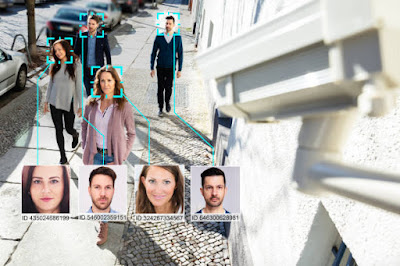
Emotion detection is a hot new field, with a slew of entrepreneurs marketing devices that promise to be able to read people's interior emotional states and AI academics attempting to increase computers' capacity to do so. 

Voice analysis, body language analysis, gait analysis, eye tracking, and remote assessment of physiological indications such as pulse and respiration rates are used to do this. 

The majority of the time, though, it's done by analyzing facial expressions. 

However, a recent research reveals that these items are constructed on a foundation of intellectual sand. 


The main issue is whether human emotions can be successfully predicted by looking at their faces. 


"Whether facial expressions of emotion are universal, whether you can look at someone's face and read emotion in their face," Lisa Feldman Barrett, a professor of psychology at Northeastern University and an expert on emotion, told me, "is a topic of great contention that scientists have been debating for at least 100 years." 


Despite this extensive history, she said that no full review of all emotion research conducted over the previous century had ever been completed. 


So, a few years ago, the Association for Psychological Science gathered five eminent scientists from opposing viewpoints to undertake a "systematic evaluation of the data challenging the popular opinion" that emotion can be consistently predicted by outward facial movements. 

According to Barrett, who was one of the five scientists, they "had extremely divergent theoretical ideas." "We arrived to the project with very different assumptions of what the data would reveal, and it was our responsibility to see if we could come to an agreement on what the data revealed and how to best interpret it." We weren't sure we could do it since it's such a divisive issue." The procedure, which was supposed to take a few months, took two years. 

Nonetheless, after evaluating over 1,000 scientific studies in the psychology literature, these experts arrived to an united conclusion: "a person's emotional state may be simply determined from his or her facial expressions" has no scientific basis. 


According to the researchers, there are three common misconceptions "about how emotions are communicated and interpreted in facial movements." 


The relationship between facial expressions and emotions is neither dependable, particular, or generalizable (i.e., the same emotions are not always exhibited in the same manner) (the effects of different cultures and contexts has not been sufficiently documented). 

"A scowling face may or may not be an indication of rage," Barrett said to me. 

People frown in rage at times, and you could grin, weep, or simply seethe with a neutral look at other moments. 

People grimace at other times as well, such as when they're perplexed, concentrating, or having gas." These results do not suggest that individuals move their faces at random or that [facial expressions] have no psychological significance, according to the researchers. 

Instead, they show that the facial configurations in issue aren't "fingerprints" or diagnostic displays that consistently and explicitly convey various emotional states independent of context, person, or culture. 

It's impossible to deduce pleasure from a grin, anger from a scowl, or sorrow from a frown, as most of today's technology seeks to accomplish when applying what are incorrectly considered to be scientific principles. 

Because an entire industry of automated putative emotion-reading devices is rapidly growing, this work is relevant. 


The market for emotion detection software is expected to reach at least $3.8 billion by 2025, according to our recent research on "Robot Surveillance." 


Emotion detection (also known as "affect recognition" or "affective computing") is already being used in devices for marketing, robotics, driving safety, and audio "aggression detectors," as we recently reported. 

Emotion identification is built on the same fundamental concept as polygraphs, or "lie detectors": that a person's internal mental state can be accurately associated with physical bodily motions and situations. 

They can't — and this includes face muscles in particular. 

It seems to reason that what is true of facial muscles would also be true of all other techniques of detecting emotion, such as body language and gait. 

However, the assumption that such mind reading is conceivable might cause serious damage. 


A jury's cultural misunderstanding of what a foreign defendant's facial expressions mean, for example, can lead to a death sentence rather than a prison sentence. 


When such mindset is translated into automated systems, it may lead to further problems. 

For example, a "smart" body camera that incorrectly informs a police officer that someone is hostile and angry might lead to an unnecessary shooting. 


"There is no automatic emotion identification. 

The top algorithms can confront a face — full frontal, no occlusions, optimal illumination — and are excellent at recognizing facial movements. 

They aren't able, however, to deduce what those facial gestures signify."


~ Jai Krishna Ponnappan

You may also want to read more about Artificial Intelligence here.


See Also: 


AI Emotions, AI Emotion Recognition, AI Emotional Intelligence, Surveillance Technologies, Privacy and Technology, AI Bias, Human Rights.


Download PDF: 


Analog Space Missions: Earth-Bound Training for Cosmic Exploration

What are Analog Space Missions? Analog space missions are a unique approach to space exploration, involving the simulation of extraterrestri...