Showing posts sorted by relevance for query small satellites. Sort by date Show all posts

What Is The SSLV Rocket?


    What Is SSLV?

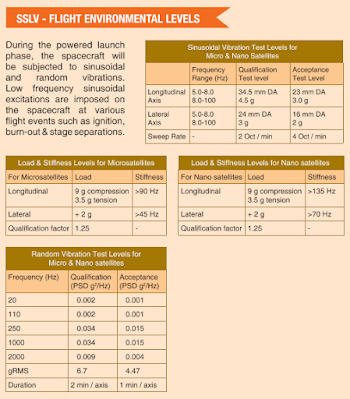
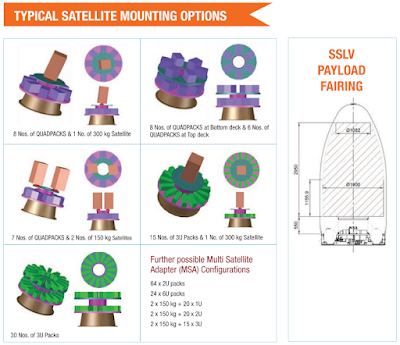
    The Small Satellite Launch Vehicle (SSLV) is an ISRO-developed small-lift launch vehicle with a payload capacity of 500 kg (1,100 lb) to low Earth orbit (500 km (310 mi)) or 300 kg (660 lb) to Sun-synchronous orbit (500 km (310 mi)) for launching small satellites, as well as the ability to support multiple orbital drop-offs. 


    SSLV is designed with low cost and quick turnaround in mind, with launch-on-demand flexibility and minimum infrastructure needs. 

    The SSLV-D1 launched from the First Launch Pad on August 7, 2022, but failed to reach orbit. 

    SSLV launches to Sun-synchronous orbit will be handled in the future by the SSLV Launch Complex (SLC) at Kulasekharapatnam in Tamil Nadu


    After entering the operational phase, the vehicle's manufacture and launch operations would be handled by an Indian consortium led by NewSpace India Limited (NSIL). 


    What Is The Origin And Evolution Of SSLV?


    The SSLV was created with the goal of commercially launching small satellites at a far lower cost and with a greater launch rate than the Polar Satellite Launch Vehicle (PSLV)

    SSLV has a development cost of 169.07 crore (US$21 million) and a production cost of 30 crore (US$3.8 million) to 35 crore (US$4.4 million). 

    The expected high launch rate is based on mostly autonomous launch operations and simplified logistics in general. 

    In comparison, a PSLV launch employs 600 officials, but SSLV launch procedures are overseen by a tiny crew of about six persons. 


    The SSLV's launch preparation phase is predicted to be less than a week rather than months. 


    The launch vehicle may be erected vertically, similar to the current PSLV and Geosynchronous Satellite Launch Vehicle (GSLV), or horizontally, similar to the decommissioned Satellite Launch Vehicle (SLV) and Augmented Satellite Launch Vehicle (ASLV)


    The vehicle's initial three stages employ HTPB-based solid propellant, with a fourth terminal stage consisting of a Velocity-Trimming Module (VTM) with eight 50 N reaction control thrusters and eight 50 N axial thrusters for altering velocity. 


    SSLV's first and third stages (SS1) are novel, while the second stage (SS2) is derived from PSLV's third stage (HPS3). 


    Where Is The SSLV Launch Complex?


    Early developmental flights and those to inclined orbits would launch from Sriharikota, first from existing launch pads and ultimately from a new facility in Kulasekharapatnam known as the SSLV Launch Complex (SLC). 

    In October 2019, tenders for production, installation, assembly, inspection, testing, and Self Propelled Launching Unit (SPU) were announced. 

    When completed, this proposed spaceport at Kulasekharapatnam in Tamil Nadu would handle SSLV launches to Sun-synchronous orbit. 


    What Is The History Of The SSLV?

    Rajaram Nagappa recommended the development route of a 'Small Satellite Launch Vehicle-1' to launch strategic payloads in a National Institute of Advanced Studies paper in 2016. 


    S. Somanath, then-Director of Liquid Propulsion Systems Centre, acknowledged a need for identifying a cost-effective launch vehicle configuration with 500 kg payload capacity to LEO at the National Space Science Symposium in 2016, and development of such a launch vehicle was underway by November 2017. 


    The vehicle design was completed by the Vikram Sarabhai Space Centre (VSSC) in December 2018. 

    All booster segments for the SSLV first stage (SS1) static test (ST01) were received in December 2020 and assembled in the Second Vehicle Assembly Building (SVAB). 

    On March 18, 2021, the SS1 first-stage booster failed its first static fire test (ST01). 

    Oscillations were detected about 60 seconds into the test, and the nozzle of the SS1 stage disintegrated after 95 seconds. 

    The test was supposed to last 110 seconds. 

    SSLV's solid first stage SS1 must pass two consecutive nominal static fire tests in order to fly. 

    In August 2021, the SSLV Payload Fairing (SPLF) functional certification test was completed. 

    On 14 March 2022, the second static fire test of SSLV first stage SS1 was performed at SDSC-SHAR and satisfied the specified test goals. 


    How Will The Small Satellite Launch Vehicle (SSLV) Be Manufactured?

    ISRO has begun development of a Small Satellite Launch Vehicle to serve the burgeoning global small satellite launch service industry. 

    NSIL would be responsible for manufacturing SSLV via Indian industry partners. 


    What Are The Unique Features Of The Small Satellite Launch Vehicle (SSLV)?

    SSLV has been intended to suit "Launch on Demand" criteria while being cost-effective. 

    It is a three-stage all-solid vehicle capable of launching up to 500 kilograms satellites into 500 km LEO. 

    What Are The Expected Benefits Of The SSLV Rocket?

    Reduced Turn-around Time Launch on Demand Cost Optimization.

    Realization and Operation Ability to accommodate several satellites.

    Minimum infrastructure required for launch Design practices that have stood the test of time.

    The first flight from SDSC SHAR was originally scheduled during the fourth quarter of 2019. It occurred only in August of 2022.

    Following the first developmental flights, ISRO plans to produce SSLV via Indian Industries through its commercial arm, NSIL. 


    What Is The Operational Performance History Of The SSLV?


    The SSLV's maiden developmental flight was place on August 7, 2022. 

    SSLV-D1 was the name of the flying mission. 

    The SSLV-D1 flight's mission goals were not met. 

    The rocket featured three stages and a fourth Velocity Trimming Module (VTM). 

    The rocket stood 34m tall, with a diameter of 2m, and a lift-off mass of 120t in its D1 version. 

    The rocket launched EOS 02, a 135 kilograms Earth observation satellite, and AzaadiSAT, an 8 kg CubeSat payload designed by Indian students to promote inclusion in STEM education. 


    The SSLV-D1 was planned to deploy the two satellite payloads in a circular orbit with a height of 356.2 km and an inclination of 37.2°. 

    The ISRO's stated reason for the mission's failure was software failure. 

    The mission software identified an accelerometer anomaly during the second stage separation, according to the ISRO. 

    As a result, the rocket navigation switched from closed loop to open loop guidance. 

    Despite the fact that this change in guiding mode was part of the redundancy incorporated into the rocket's navigation, it was not enough to save the mission. 

    During open loop guiding mode, the last VTM stage only fired for 0.1s rather than the required 20s. 

    As a result, the two satellites and the rocket's VTM stage were injected into an unstable elliptical 35676 km orbit. 

    The SSLV-final D1's VTM stage had 16 hydrazine-fueled (MMH+MON3) thrusters. 

    Eight of them were to regulate the orbital velocity and the other eight were to control the altitude. 

    During the orbital insertion maneuvers, the VTM stage also controlled pitch, yaw, and roll. 

    The SSLV-three D1's major stages all worked well. 

    However, this was insufficient to provide enough thrust for the two satellite payloads to establish stable orbits. 

    The VTM stage required to burn for at least 20 seconds to impart enough extra orbital velocity and altitude adjustments to put the two satellite payloads into their designated stable orbits. 

    Instead, the VTM activated at 653.5s and shut down at 653.6s after lift-off. 

    After the VTM stage was partially fired, the EOS 02 was released at 738.5s and AazadiSAT at 788.4s after liftoff. 

    These failures occurred, causing the satellites to reach an unstable orbit and then be destroyed upon reentry. 


    What Was The Performance Outcome Of The SSLV D1 Mission?

    SSLV's maiden developmental flight. 

    The mission goal was a circular orbit of 356.2 km height and 37.2° inclination. 

    Two satellite payloads were carried on the trip. 


    1. The 135-kilogram EOS-02 Earth observation satellite 
    2. and the 8-kilogram AzaadiSAT CubeSat. 


    Due to sensor failure and flaws in onboard software, the stage and two satellite payloads were put into an unstable elliptical orbit of 35676 km and then destroyed upon reentry. 

    The mission software, according to the ISRO, failed to detect and rectify a sensor malfunction in the VTM stage. 

    The last VTM stage only fired momentarily (0.1s). 


    What Were The Overall Lessons From The SSLV-D1/EOS-02 Mission?


    Mission ISRO developed a small satellite launch vehicle (SSLV) to launch up to 500 kilograms satellites into Low Earth Orbits on a 'launch-on-demand' basis . 


    The SSLV-D1/EOS-02 Mission's first developmental flight was slated for August 7, 2022, at 09:18 a.m. 

    (IST) from the Satish Dhawan Space Centre's First Launch Pad in Sriharikota. 

    The SSLV-D1 mission would send EOS-02, a 135 kilograms satellite, into a low-Earth orbit 350 kilometers above the equator at an inclination of roughly 37 degrees. 

    The mission also transports the AzaadiSAT satellite. 

    SSLV is built with three solid stages weighing 87 t, 7.7 t, and 4.5 t. 

    The satellite is inserted into the desired orbit using a liquid propulsion-based velocity trimming module. 

    • SSLV is capable of launching Mini, Micro, or Nanosatellites (weighing between 10 and 500 kg) into a 500 km planar orbit. 
    • SSLV gives low-cost on-demand access to space. 
    • It has a quick turnaround time, the ability to accommodate numerous satellites, the ability to launch on demand, minimum launch infrastructure needs, and so on. 


    SSLV-D1 is a 34-meter-tall, 2-meter-diameter vehicle with a lift-off mass of 120 tonnes. 

    ISRO developed and built the EOS-02 earth observation satellite. 


    This microsat class satellite provides superior optical remote sensing with excellent spatial resolution in the infrared spectrum. 

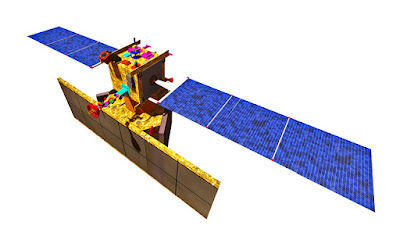
    The bus configuration is based on the IMS-1 bus. 

    AzaadiSAT is an 8U Cubesat that weighs around 8 kg. 

    It transports 75 distinct payloads, each weighing roughly 50 grams and performing femto-experiments. 

    These payloads were built with the help of female students from rural areas around the nation. 

    The payloads were assembled by the "Space Kidz India" student team. 

    A UHF-VHF Transponder operating on ham radio frequency to allow amateur radio operators to transmit speech and data, a solid state PIN diode-based Radiation counter to detect the ionizing radiation in its orbit, a long-range transponder, and a selfie camera are among the payloads. 

    The data from this satellite was planned to be received using the ground system built by 'Space Kidz India.'  

    Both satellite missions have failed as a result of the failure of SSLV-D1's terminal stage.


    When Is The SSLV D2 Planned To Lift Off?

    The SSLV's second developmental flight is planned for November of 2022. 

    It is intended to transport four Blacksky Global satellites weighing 56 kg to a 500 km circular orbit with a 50° inclination.  

    It will place the X-ray polarimeter satellite into low Earth orbit(LEO).


    ~ Jai Krishna Ponnappan.


    PSLV-C52 Launch Of EOS-04, INSPIREsat-1 And INS-2TD

      Watch the PSLV-C52/EOS-04 Launch Live Streaming. (Scheduled On: February 14, 2022, at 05:30 IST)


      PSLV-C 52 Launch Updates:


      ISRO's first launch of 2022, under the leadership of new Chairman S. Somanath, went off without a hitch, precisely positioning all three satellites in their assigned orbits. 


      The PSLV C-52 of the Indian Space Research Organization lighted up the pre-dawn black sky and Pulicat Lake with thick orange fumes as it rose into the air, breaking the early stillness with the booming roar of the launch vehicle that had three satellites on board. 


      ISRO's first launch of 2022, under the leadership of new Chairman S. Somanath, went off without a hitch, precisely positioning all three satellites in their assigned orbits. 

      At 0617 IST, PSLV-C52 inserted EOS-04 into a 529km altitude sun-synchronous polar orbit, according to the Indian Space Research Organization. 

      The PSLV C-52 was the PSLV's 54th flight and the 23rd mission to use the PSLV-XL variant. 


      PSLV-C52 launched three satellites from the first launch pad at Satish Dhawan Space Centre in Sriharikota at 5.59 a.m on Monday, including its principal payload, the EOS-04 radar imaging satellite. 


      • The EOS-04 satellite was put in a solar synchronous orbit 17 minutes after launch. 
      • The rocket then inserted the two additional satellites, INS-2TD and Inspiresat-1, a minute later. 
      • The fourth stage was passivated to remove residual propellants four minutes after lift-off, using mixed oxides of nitrogen (MON) passivation followed by mono methyl hydrazine (MMH) passivation, two propellants that power PSLV's upper stage. 
      • The passivation process lasted ten minutes. 
      • Passivation is the process of removing any remaining fuel from a rocket to avoid the higher stages from exploding. 
      • The top stage burns inactively or vents the leftover propellants. 


      PSLV's 54th flight and 23rd mission with six PSOM-XLs used the PSLV-XL configuration. 


      "The main satellite, EOS-04, has been placed in a very exact orbit by PSLV-C52," Isro chairman S Somanath stated, congratulating the crew. 

      The INS-2TD and INSPIREsat-1 co-passenger satellites have also been put in the proper orbits. 

      This spacecraft will be one of the most valuable assets in the country's arsenal. 

      We will come back with another PSLV launch very soon." 


      "First and foremost, let me congratulate the PSLV crew for the exact inject of EOS-04," Srikanth remarked. 

      The launch has re-energized the ISRO crew. 

      The most awaited spacecraft, EOS-04, is an earth observation mission that will serve the country in agriculture, soil moisture, disaster management, disaster assessment, carbon inventory, forest and plantation management, and many other sectors with indigenously developed state-of-the-art technology SAR." 


      "After separation, EOS-04's health is in fantastic condition. 

      I'm pleased to report that the solar panels have been deployed autonomously and have begun to provide the desired electricity.... 

      The satellite will be ready to offer the first sight of photos in a few days following calibration and outgassing. 

      Many government services will be enhanced by the services. 

      EOS-04 is a minor step toward the country's objective of opening the space sector with industry engagement in the form of build to print, as well as assemble and test. 

      We were able to achieve a reasonable level of success in our endeavor." 


      The launch's success was critical for ISRO, who had a quiet 2020 with just two launches, one of which, the GSLVF10, crashed shortly after launch. 


      On Monday, the PSLV C-52, carrying the Earth Observation Satellite EOS 04, the INS-2TD, an ISRO technology demonstrator, and the INSPIREsat-1, a student satellite, launched from the Satish Dhawan Space Centre, SHAR, Sriharikota, at 5.59 a.m. 


      The three satellites were separated and sent into their orbits 18 minutes later. 


      "The EOS 04, the principal spacecraft, has been placed in a precise orbit. 

      The co-passenger satellites have been positioned in the proper orbit," Mr. Somanath said, adding that ISRO would "be back with the next PSLV launch very shortly." 


      • The EOS-4, a radar imaging satellite with a 10-year mission life, is intended to deliver high-quality pictures in all weather circumstances for agricultural, forestry, plantation, flood mapping, soil moisture, and hydrological applications. 
        • According to ISRO, the satellite would acquire earth observation data in the C-band, complementing and supplementing data from the Resourcesat, Cartosat, and RISAT-2B series. 

      • The INS-2TD will measure land and water surface temperatures, agricultural and forest delineation, and thermal inertia as a forerunner to the India-Bhutan joint satellite [INS 2-B]. 

      • INSPIREsat-1 is a student satellite developed by the Indian Institute of Space Science and Technology in collaboration with the University of Colorado in the United States. 

        • Its goal is to improve knowledge of ionosphere dynamics and coronal heating processes on the Sun. 


      On Monday, Prime Minister Narendra Modi congratulated India's space experts on the success of the PSLV C52 mission launch. 


      "Congratulations to our space experts on the successful launch of PSLV C52 mission," Mr. Modi tweeted. 


      About The EOS-04 Earth Observation Satellite:


      EOS-04 is a Radar Imaging Satellite that is intended to deliver high-quality photos in all weather circumstances for applications including agriculture, forestry, and plantations, soil moisture and hydrology, and flood mapping. 


      The spacecraft will gather data in the C-Band band, completing observations made by the Resourcesat, Cartosat, and RISAT-2B series. The satellite has a ten-year operational life. 


      The tentative launch time of the Polar Satellite Launch Vehicle, PSLV-C52, is planned for February 14, 2022, at 05:59 a.m from the Satish Dhawan Space Centre's First Launch Pad at Sriharikota. 


      The Indian Space Research Organisation (ISRO) will launch PSLV-C52, an earth observation satellite, into orbit on February 14 at 5.59 a.m., with the countdown beginning on Sunday morning. This is the ISRO's first launch mission of the year. 

      PSLV-C52 is planned to place the 1710 kg EOS-04 into a 529 km sun-synchronous polar orbit, according to ISRO. 


      PSLV-C52 Mission Summary: 


      1. The PSLV-C52 will be launched from Sriharikota's Satish Dhawan Space Centre's First Launch Pad. 


      2. According to the space agency, EOS-04 is a Radar Imaging Satellite intended to deliver high-quality photos in all weather circumstances for applications such as agriculture, forestry and plantations, soil moisture and hydrology, and flood mapping. 

      3. The mission will also carry two small satellites as co-passengers:


      1. An Indian Institute of Space Science and Technology student satellite (INSPIREsat-1) in collaboration with the University of Colorado Boulder's Laboratory of Atmospheric and Space Physics,
      2. And an ISRO technology demonstrator satellite, INS-2TD. 


      PSLV-C52 will also carry an ISRO technology demonstration satellite (INS-2TD), which is a forerunner to the India-Bhutan Joint Satellite Program (INS-2B). 


      • The 17.5-kilogram satellite will only be operational for six months. 


      The launch comes months after the disastrous loss of the Earth Observation Satellite (EOS-03) in August of last year, which was unable to be deployed owing to a "technical problem." 


      • A thermal imaging sensor on board the satellite will aid in the evaluation of land, water surface temperatures, vegetation delineation, and thermal inertia. 


      The final payload is an 8.1-kilogram student satellite called INSPIRESat-1, which was designed by the Indian Institute of Space Science & Technology in collaboration with the University of Colorado's Laboratory of Atmospheric & Space Physics. 


      • The satellite will help us better understand the dynamics of the ionosphere and the sun's coronal heating process. 
      • It has a one-year operating lifespan. 


      PSLV C-52 - The 54th Polar Satellite Launch Vehicle Launch


      The PSLV's 54th mission will see it ascend to a Sun Synchronous Orbit height of 529 kilometers above the Earth's surface, where it will deploy the Earth Observation Satellite. 


      • The PSLV is an Indian-designed third-generation launch vehicle that can carry up to 1,750 kg of cargo to 600 km altitude Sun-Synchronous Polar Orbits. 
      • In 2008, the four-stage rocket successfully launched Chandrayaan-1 to the Moon, and in 2013, the Mars Orbiter Spacecraft to Mars. 
      • The liftoff mass of the 44-meter-tall vehicle is 320 tons. 


      Stages Of The PSLV-C52:


      • PSLV's first stage is powered by the S139 solid rocket motor, which is supplemented by six solid strap-on boosters, 
      • While the second stage is powered by the Vikas engine, which was developed in India. 
      • The PSLV's third stage is a solid rocket motor that gives high thrust to the higher stages following the launch's atmospheric phase, while the fourth stage is made up of two Earth-storable liquid engines. 


      ISRO's Upcoming Missions


      In the next three months, ISRO plans to launch five significant satellites in order to reclaim its lost ground in space operations, despite stiff competition from China and commercial companies such as SpaceX, which plans to launch one satellite per week in 2022. 


      • ISRO will launch OCEANSAT-3 and INS 2B ANAND on PSLV C-53 in March and SSLV-D1 Micro SAT in April 2022, after the PSLV-C52 mission. 
      • ISRO will also launch GSAT-21, New Space India Limited's first fully sponsored satellite (NSIL). 
      • The space agency, which recently appointed renowned rocket scientist S Somnath as its new leader, has 19 missions slated for flight in 2022. 
      • Eight launch vehicle flights, seven spacecraft missions, and four technology demonstration missions are among them. 

      In August, the agency will launch its ambitious Chandrayaan-3 mission to the Moon, aiming for Gaganyaan's first uncrewed trip, the country's first astronaut mission.


      ~ Jai Krishna Ponnappan.


      You may also want to read more about space based systems here.


      Post Quantum Computing Encryption - Future-Proofing Encryption


      Encryption in the post-quantum era. 


      Many popular media depictions of quantum computing claim that the creation of dependable large-scale quantum computers will bring cryptography to an end and that quantum computers are just around the corner. 

      The latter point of view may turn out to be overly optimistic or pessimistic, if you happen to rely on quantum-computing-proof security. 

      While quantum computers have made significant progress in recent years, there's no certainty that they'll ever advance beyond laboratory proof-of-concept devices to become a realistic daily technology. (For a more thorough explanation, see a recent ASPI study.) 


      Nonetheless, if quantum computing becomes a viable technology, several of the most extensively used encryption systems would be vulnerable to quantum computer cryptography assaults because quantum algorithms may drastically shorten the time it takes to crack them. 


      For example, the RSA encryption scheme for the secure exchange of encryption keys, which underlies most web-based commerce, is based on the practical difficulty of finding prime factors of very big integers using classical (non-quantum) computers.

      However, there is an extremely efficient quantum technique for prime factorization (known as ‘Shor's algorithm') that would make RSA encryption vulnerable to attack, jeopardizing the security of the vast quantity of economic activity that relies on the ability to safeguard moving data. 

      Other commonly used encryption protocols, such as the Digital Signature Algorithm (DSA) and Elliptic Curve DSA, rely on mathematical procedures that are difficult to reverse conventionally but may be vulnerable to quantum computing assaults. 


      Moving to secure quantum communication channels is one technique to secure communications. 


      However, while point-to-point quantum channels are conceivable (and immune to quantum computer assaults), they have large administration overheads, and constructing a quantum ‘web' configuration is challenging. 

      A traditional approach is likely to be favored for some time to come for applications such as networking military force units, creating secure communications between intelligence agencies, and putting up a secure wide-area network. 


      Non-quantum (classical) techniques to data security, fortunately, are expected to remain safe even in the face of quantum computer threats. 


      Quantum assaults have been found to be resistant to the 256-bit Advanced Encryption Standard (AES-256), which is routinely employed to safeguard sensitive information at rest. 

      Protecting data at rest addresses only half of the problem; a secure mechanism for transferring encryption keys between the start and end locations for data in motion is still required. 


      As a result, there's a lot of work being done to construct so-called "post-quantum" encryption systems that rely on mathematical processes for which no quantum algorithms exist. 


      IBM has already detailed a quantum-resistant technology for safely transporting data across networks.  If the necessity arises, such a system might possibly replace RSA and other quantum-vulnerable encryption systems.


      If everything else fails, there's always encryption technologies for the twenty-first century. 


      One technique to improve communication security is to be able to ‘narrowcast' in such a way that eavesdropping is physically difficult, if not impossible. 

      However, this is not always practicable, and there will always be messages that must pass over channels that are sensitive to eavesdropping. 


      Even so-called "secure" channels can be breached at any time. 


      The actual tapping of a subsea cable run to a Soviet naval facility on the Kamchatka Peninsula by the US Navy in the 1970s is a good example. The cable was deemed safe since it ran wholly within Russian territorial seas and was covered by underwater listening posts. 

      As a result, it transmitted unencrypted messages. The gathered signals, though not of high intelligence value in and of themselves, gave cleartext ‘cribs' of Soviet naval communications that could be matched with encrypted data obtained elsewhere, substantially simplifying the cryptanalytic work. 

      Even some of the LPI/LPD technology systems discussed in earlier sections may be subject to new techniques. 

      For example, the Pentagon has funded research on devices that gather single photons reflected off air particles to identify laser signals from outside the beam, with the goal of extracting meaningful information about the beam direction, data speeds, and modulation type. The ultimate objective is to be able to intercept laser signals in the future.  


      A prudent communications security approach is to expect that an opponent will find a method to access communications, notwithstanding best attempts to make it as difficult as possible. 


      Highly sensitive information must be safeguarded from interception, and certain data must be kept safe for years, if not decades. Cryptographic procedures that render an intercepted transmission unintelligible are required. 

      As we saw in the section on the PRC's capabilities, a significant amount of processing power is currently available to target Australian and ally military communications, and the situation is only going to become worse. 

      On the horizon are technical dangers, the most well-known of which is the potential for effective quantum computing. Encryption needs to be ‘future proofed.'


      As secure intermediates, space-based interconnections are used. 


      If the connection can be made un-interceptable, space-based communications might provide a secure communication route for terrestrial organizations. Information and control signals between spacecraft and the Earth have been sent by radio waves to and from ground stations until now. 

      Interception is achievable when collection systems are close enough to the uplink transmitter to collect energy from either the unavoidable side lobes of the main beam or when the collection system is able to be positioned inside the same downlink footprint as the receiver. 

      The use of laser signals of various wavelengths to replace such RF lines has the potential to boost data speeds while also securing the communications against eavesdropping. 


      Using laser communication connection between spacecraft has a number of advantages as well. 

      Transmission losses over long distances restrict the efficiency with which spacecraft with low power budgets can exchange vast amounts of data, and RF connections inevitably restrict bandwidth. 


      The imposts on space, weight, and power on spacecraft would be reduced if such linkages were replaced by laser communications. 

      The benefits might include being able to carry larger sensor and processing payloads, spending more time on mission (owing to reduced downtime to recharge batteries), or a combination of the two. 

      In the United States, the Trump administration's Space Force and anticipated NASA operations (including a presence on the moon and deep space missions) have sparked a slew of new space-based communications research initiatives. 


      NASA has a ten-year project road map (dubbed the "decade of light") aiming at creating infrared and optical frequency laser communication systems, combining them with RF systems, and connecting many facilities and spacecraft into a reliable, damage-resistant network. 

      As part of that effort, it is developing various technology demonstrations. 

      Its Laser Communications Relay Demonstration, which is set to be live in June, will utilize lasers to encode and send data at speeds 10 to 100 times faster than radio systems.  

      NASA uses the example of transmitting a map of Mars' surface back to Earth, which may take nine years with present radio technology but just nine weeks using laser communications. T

      he practicality of laser communications has been demonstrated in laboratory prototype systems, and NASA plans to launch space-based versions later this year. The Pentagon's Space Development Agency (SDA) and the Defense Advanced Research Projects Agency (DARPA) are both working on comparable technologies, but with military and intelligence purposes in mind. 


      The SDA envisions hundreds of satellites linked by infrared and optical laser communication connections. 

      Sensor data will be sent between spacecraft until it reaches a satellite in touch with a ground station, according to the plan. Information from an orbiting sensor grid may therefore be sent to Earth in subsecond time frames, rather than the tens of minutes it can take for a low-Earth-orbiting satellite to pass within line of sight of a ground station. 

      Furthermore, because to the narrow beams created by lasers, an eavesdropper has very limited chance of intercepting the message. Because of the increased communication efficiency, ‘traffic jams' in the considerably more extensively utilized radio spectrum are significantly less likely to occur. 

      This year, the SDA plans to conduct a test with a small number of "cubesats." Moving to even higher frequencies, X-ray beams may theoretically transport very high data-rate messages. In terrestrial applications, ionization of air gases would soon attenuate signals, but this isn't an issue in space, and NASA is presently working on gigabit-per-second X-ray communication lines between spacecraft.  

      Although NASA is primarily interested in applications for deep space missions (current methods can take many hours to transmit a single high-resolution photograph of a distant object such as an asteroid after a flyby), the technology has the potential to link future constellations of intelligence-gathering and communications satellites with extremely high data-rate channels. On board the International Space Station, NASA has placed a technology demonstration.


      Communications with a low chance of being detected. 


      One technique to keep communications safe from an enemy is to never send them over routes that can be detected or intercepted. For mobile force units, this isn't always practicable, but when it is, communications security may be quite effective. 

      The German army curtailed its radio transmissions in the run-up to its Ardennes operation in December 1944, depending instead on couriers and landlines operating within the region it held (which was contiguous with Germany, so that command and control traffic could mostly be kept off the airwaves).

       The build-up of considerable German forces was overlooked by Allied intelligence, which had been lulled into complacency by having routinely forewarned of German moves via intercepted radio communications. 

      Even today, when fibre-optic connections can transmit data at far greater rates than copper connections, the option to go "off air" when circumstances allow is still valuable. Of course, mobile troops will not always have the luxury of transferring all traffic onto cables, especially in high-speed scenarios, but there are still techniques to substantially minimize the footprint of communication signals and, in some cases, render them effectively undetectable. 


      Frequency-hopping and spread-spectrum radios were two previous methods for making signals less visible to an eavesdropper. 


      Although these approaches lower the RF footprint of transmissions, they are now vulnerable to detection, interception, and exploitation using wideband receivers and computer spectral analysis tools. Emerging technologies provide a variety of innovative approaches to achieve the same aim while improving security. 

      The first is to use extremely directed ‘line of sight' signals that may be focused directly at the intended receiver, limiting an adversary's ability to even detect the broadcast. This might be accomplished, for example, by using tightly concentrated laser signals of various wavelengths that may be precisely directed at the desired recipient's antenna when geography allow. 


      A space-based relay, in which two or more force components are linked by laser communication channels with a constellation of satellites, which are connected by secure links (see the following section for examples of ongoing work in that field), offers a difficult-to-intercept communications path. 


      As a consequence, data might be sent with far less chance of being intercepted than RF signals. The distances between connecting parties are virtually unlimited for a satellite system with a worldwide footprint for its uplinks and downlinks. Moving radio signals to wavelengths that do not travel over long distances due to atmospheric absorption, but still give effective communications capabilities at small ranges, is a second strategy that is better suited to force elements in close proximity. 


      The US Army, for example, is doing research on deep ultraviolet communications (UVC). 5 UVC has the following benefits over radio frequencies such as UHF and VHF: 


      • the higher frequency enables for faster data transfer

      • very low-powered signals can still be received over short distances

      • signal strength rapidly drops off over a critical distance 


      Communications with a low chance of being detected. One technique to keep communications safe from an enemy is to never send them over routes that can be detected or intercepted. 


      For mobile force units, this isn't always practicable, but when it is, communications security may be quite effective. The German army curtailed its radio transmissions in the run-up to its Ardennes operation in December 1944, depending instead on couriers and landlines operating within the region it held (which was contiguous with Germany, so that command and control traffic could mostly be kept off the airwaves). 

      The build-up of considerable German forces was overlooked by Allied intelligence, which had been lulled into complacency by having routinely forewarned of German moves via intercepted radio communications. 

      Even today, when fiber-optic connections can transmit data at far greater rates than copper connections, the option to go "off air" when circumstances allow is still valuable. Of course, mobile troops will not always have the luxury of transferring all traffic onto cables, especially in high-speed scenarios, but there are still techniques to substantially minimize the footprint of communication signals and, in some cases, render them effectively undetectable. 


      Frequency-hopping and spread-spectrum radios were two previous methods for making signals less visible to an eavesdropper. 


      Although these approaches lower the RF footprint of transmissions, they are now vulnerable to detection, interception, and exploitation using wideband receivers and computer spectral analysis tools. Emerging technologies provide a variety of innovative approaches to achieve the same aim while improving security. 

      The first is to use extremely directed ‘line of sight' signals that may be focused directly at the intended receiver, limiting an adversary's ability to even detect the broadcast. 

      This might be accomplished, for example, by using tightly concentrated laser signals of various wavelengths that may be precisely directed at the desired recipient's antenna when geography allow. 

      A space-based relay, in which two or more force components are linked by laser communication channels with a constellation of satellites, which are connected by secure links (see the following section for examples of ongoing work in that field), offers a difficult-to-intercept communications path. 

      As a consequence, data might be sent with far less chance of being intercepted than RF signals. The distances between connecting parties are virtually unlimited for a satellite system with a worldwide footprint for its uplinks and downlinks. 

      Moving radio signals to wavelengths that do not travel over long distances due to atmospheric absorption, but still give effective communications capabilities at small ranges, is a second strategy that is better suited to force elements in close proximity. 


      The US Army, for example, is doing research on deep ultraviolet communications (UVC). 5 UVC has the following benefits over radio frequencies such as UHF and VHF: 


      • the higher frequency allows for faster data transfer 

      • very low-powered signals can still be heard over short distances 

      • there is a quick drop-off in signal strength at a critical distance


      Analog Space Missions: Earth-Bound Training for Cosmic Exploration

      What are Analog Space Missions? Analog space missions are a unique approach to space exploration, involving the simulation of extraterrestri...